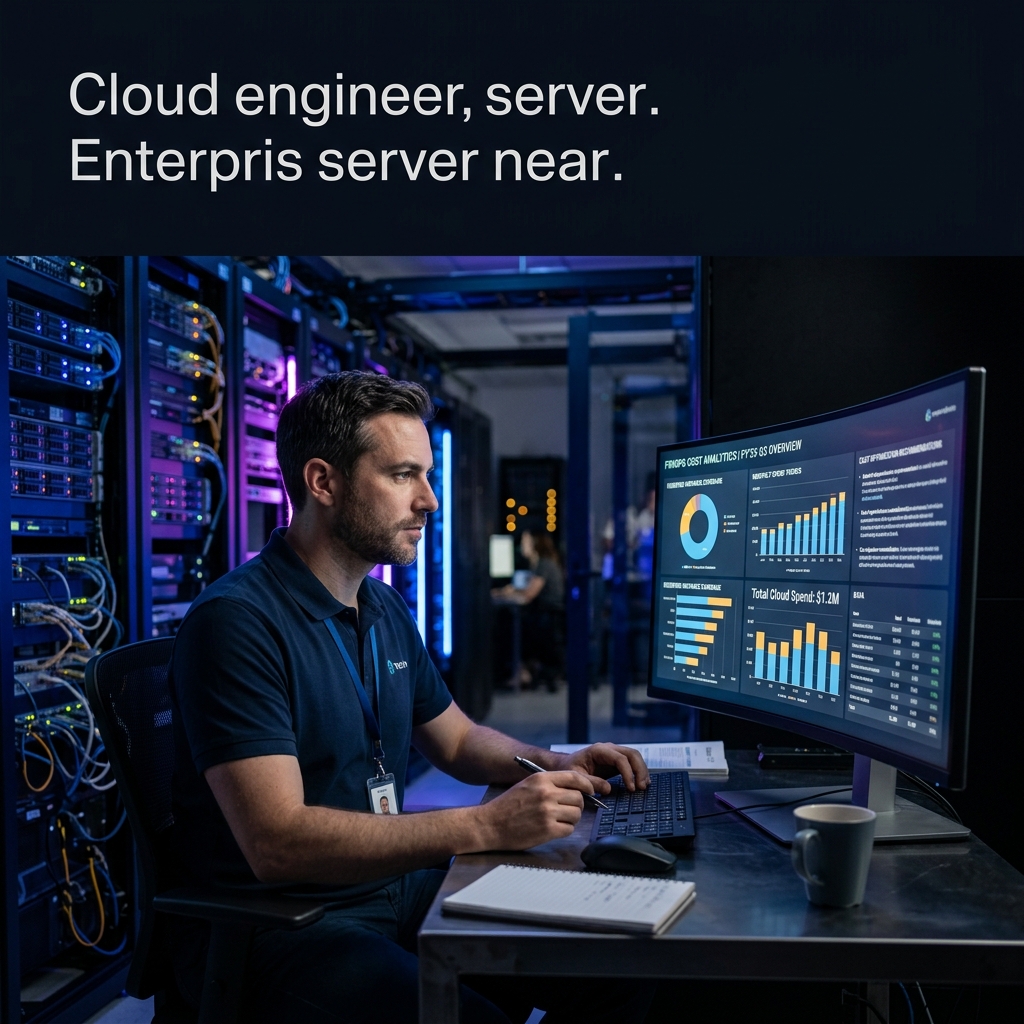
Cloud 3.0 and the Rise of FinOps Integration: Architecting for Cost Efficiency
The era of “grow at all costs” in cloud computing has definitively ended. As we navigate the complexities of Cloud 3.0—characterized by distributed, multi-cloud, and highly decentralized architectures—enterprise technology leaders are facing a stark reality: cloud spending is spiraling out of control.
The initial promise of the cloud was infinite scalability and pay-for-what-you-use efficiency. However, without rigorous architectural oversight, that infinite scalability quickly turns into infinite billing. This is where FinOps Integration transitions from a buzzword into a mission-critical engineering discipline.
At ServerCare360, our L3/L4 engineering teams frequently encounter enterprises drowning in opaque billing statements from AWS, GCP, Azure, and Oracle Cloud. This guide breaks down the technical realities of Cloud 3.0 and how integrating FinOps directly into your infrastructure architecture is the only sustainable path forward.
The Reality of Cloud 3.0: Complexity Breeds Waste
Cloud 1.0 was about lifting and shifting basic virtual machines. Cloud 2.0 introduced cloud-native services like managed databases and basic containerization.
Today, Cloud 3.0 is defined by a highly heterogeneous mix of serverless functions, globally distributed Kubernetes clusters, edge computing, and AI-driven data pipelines spanning multiple providers. While this architecture offers unparalleled resilience and performance, it creates a massive blind spot for financial oversight.
The Midnight Nightmare: The Cost of Unmanaged Autoscaling
Consider a realistic scenario: It’s 3:00 AM on a holiday weekend. An unoptimized database query deployed in the latest release causes your application to slow down. In response, your cloud provider’s autoscaling group detects the CPU spike and begins aggressively spinning up high-compute instances to handle the perceived "load."
By the time your engineering team identifies and patches the bad query at 9:00 AM, your infrastructure has consumed thousands of dollars in unnecessary compute resources. This isn't a hypothetical—it is a weekly occurrence for enterprises lacking preemptive FinOps integration.
Core Principles of Technical FinOps Integration
FinOps is not just a job for the finance department; it is a collaborative engineering culture. True FinOps integration requires embedding financial accountability into the CI/CD pipeline and infrastructure code.
1. Tagging and Resource Allocation Strictness
You cannot optimize what you cannot measure. A robust FinOps strategy begins with granular, mandatory tagging policies enforced via Infrastructure as Code (IaC).
* Enforce Tagging via Terraform: Reject any Terraform apply or CloudFormation stack that does not include specific Environment, Project, and CostCenter tags.
* Zombie Resource Identification: Use automated scripts to detect unattached EBS volumes, idle Elastic IPs, and orphaned snapshots.
2. Right-Sizing Compute at the Kernel Level
Many organizations over-provision instances "just to be safe," resulting in servers running at 10% CPU utilization. * Historical Load Analysis: Utilize advanced monitoring tools like Grafana and Zabbix to analyze CPU, memory, and I/O wait times over 90-day periods. * Instance Family Optimization: Migrate generic compute instances to memory-optimized or compute-optimized instance types based on the actual workload requirements of the application.
3. Spot Instances and Preemptible VMs Architecture
For stateless workloads, CI/CD pipelines, and batch processing, paying on-demand prices is a massive waste of capital. * Kubernetes Spot Node Groups: Configure your EKS or GKE clusters to utilize Spot Instances for non-critical workloads, utilizing automated node-draining to gracefully handle instance termination. * Cost Savings: This single architectural shift can reduce compute costs by up to 80% for specific workloads.
ServerCare360: Your Partner in Cloud Optimization
Implementing a FinOps culture requires deep technical expertise across multiple cloud providers. It requires engineers who understand not just the billing dashboard, but the underlying Linux kernel and container orchestration layers that drive those costs.
This is where ServerCare360 excels. Our certified L4 engineers manage highly complex architectures across AWS, GCP, Azure, and Oracle Cloud. We don't just keep your servers online; we continuously optimize them for peak financial performance.
Our approach to Cloud 3.0 management includes: * Architectural Audits: Deep-dive analysis of your current infrastructure to identify immediate cost-saving opportunities. * Automated Cost Controls: Implementing hard limits, anomaly detection alerts, and IaC policies to prevent accidental over-provisioning. * Performance Tuning: Optimizing your Linux stack (Nginx, PHP-FPM, MySQL) so you can serve more traffic on smaller, cheaper instance types.
Stop Guessing About Your Cloud Bill
In the Cloud 3.0 landscape, every inefficient line of code and every unoptimized server configuration translates directly to lost revenue. You need an infrastructure partner who treats your cloud budget with the same critical care as your uptime.
Are you ready to bring your cloud costs under control?
Schedule a Free Infrastructure Audit with ServerCare360 and let our expert engineers identify where you are overspending and how we can architect a leaner, faster, and more cost-effective cloud environment.